RAILFAN GUIDES HOME RAILROAD SIGNALS HOME
In 2021,
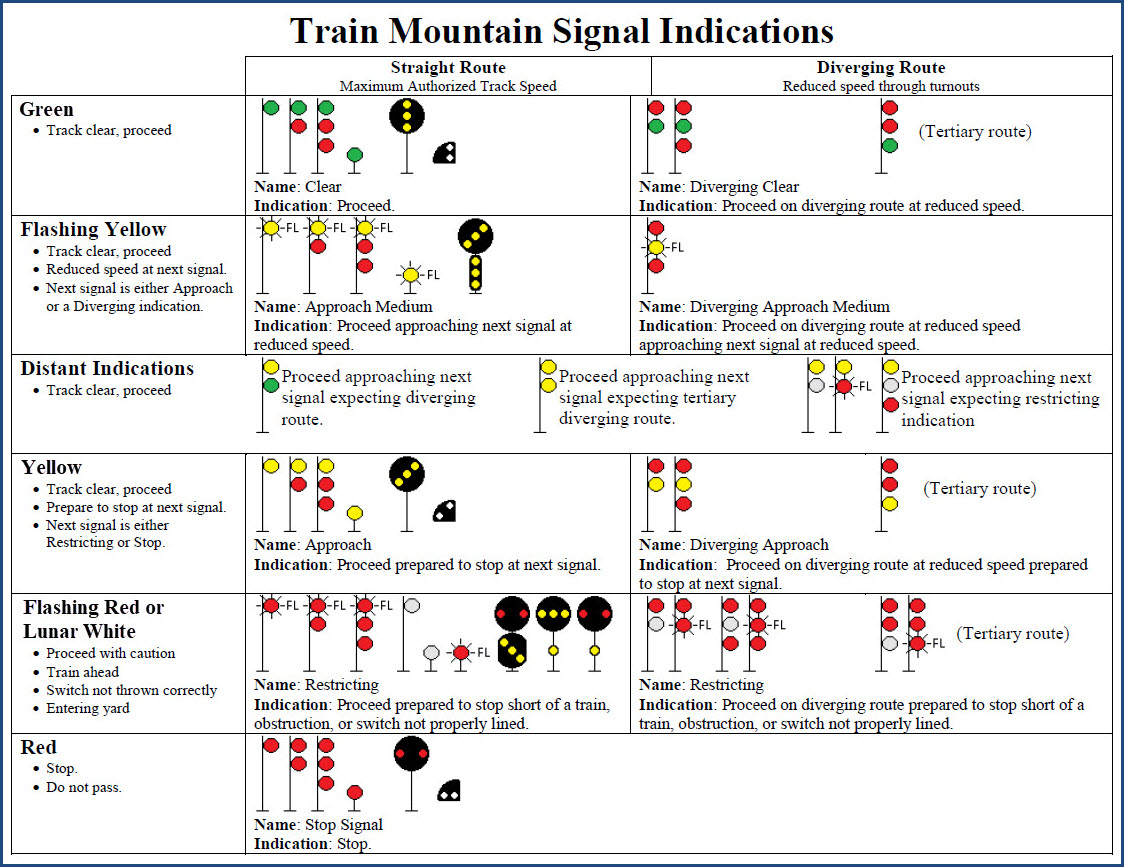
Train Mountain received a couple of Pennsylvania Railroad Position Light
(PL) signals from a museum in Folsom
CA. They are restoring them and placing them on their system, so their
signal chart had to be updated. Thanks to John Cooper, V.P. of Train
Mountain for supplying the information and new chart!
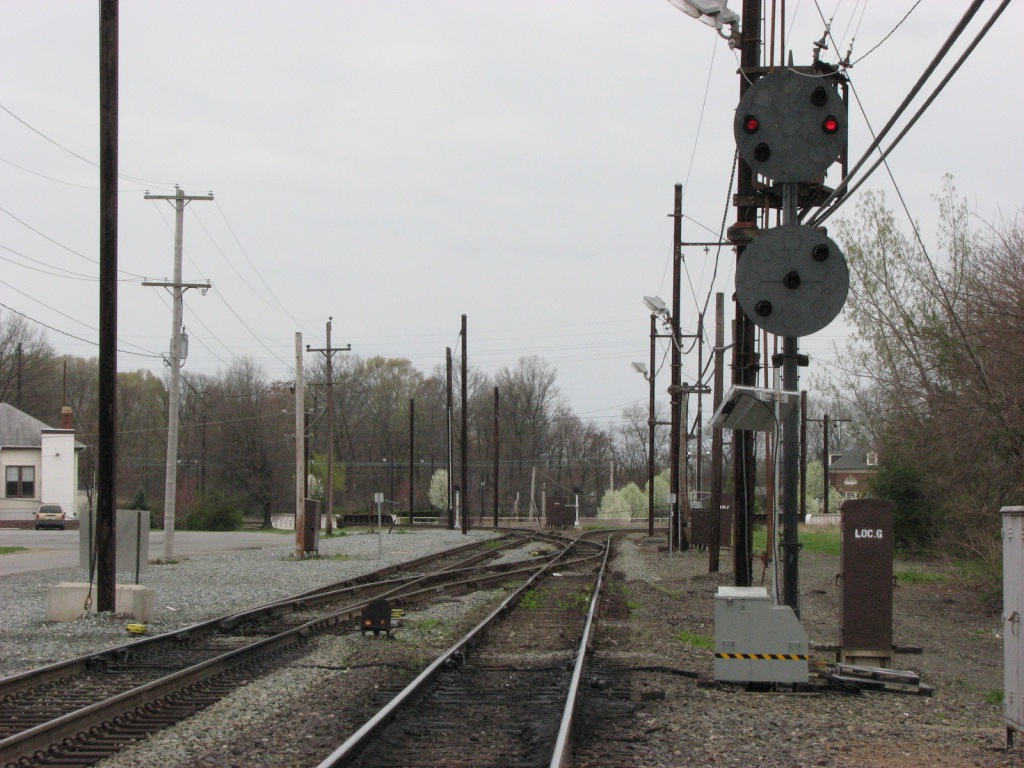
BTW, Here is a "red eye" PL signal in
Perryville MD
going into the wye, if
you're not familiar with them.
The Pennsy, Penn Central, and Conrail replaced the STOP aspect lenses with
red in many of the Pennsy PL's, mostly east of Pittsburgh.
My page on PL signals is
here.
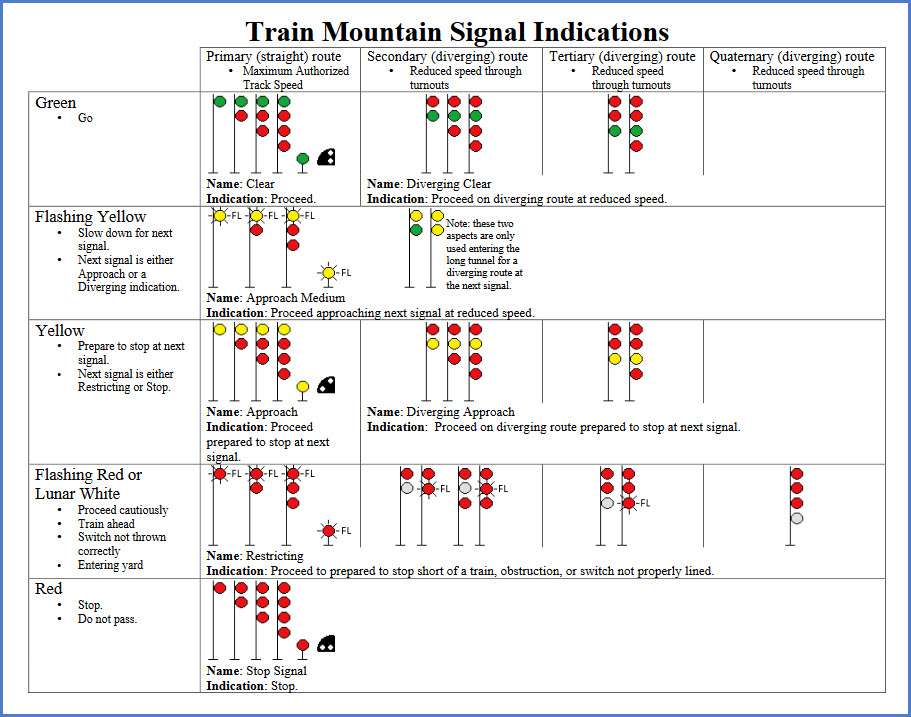
Here is the previous version of the signal chart.....
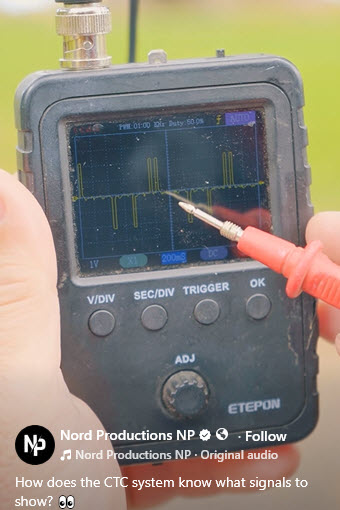
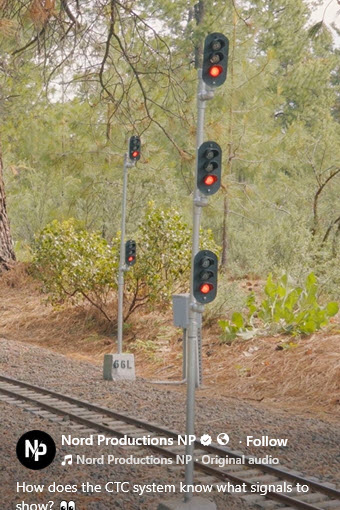
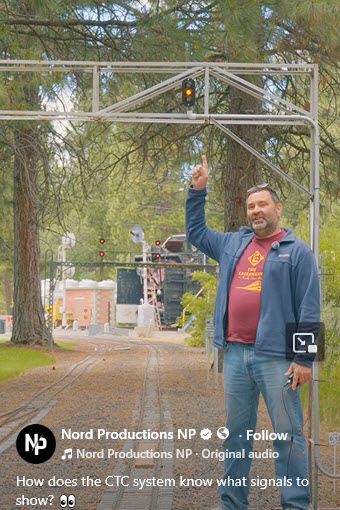
Thanks to my longtime buddy (60 years) Rob Catlin, who came across this short FB video,
it explains (kinda) how the signals at Train Mountain work. This is a
vastly simplified explanation, because to get the signals to do what they do, there is a lot
more work to be done once the -receive end- receives the signals displayed on his oscilloscope.
AND, you also need something at the transmitting end to generate the pulses!
I don't know what they use to generate and decode the signals, but this would be
a great place to use Raspberry Pi Zero's :-).
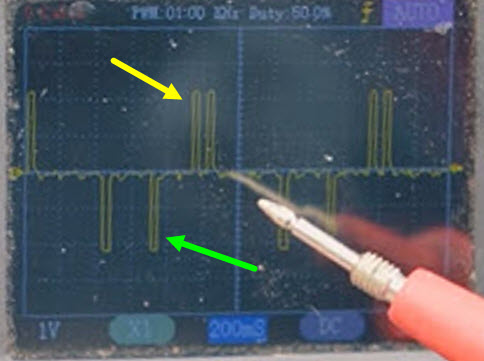
According to the video, the two positive going pulses pointed to by the yellow
arrows, tell the preceding signal what aspect to display, I'm guessing generated
by a block occupancy detector located at the upcoming signal location (it's
irrelevant which end the detector is at - just depends on how you designed the system).
The time between the pulses determine what aspect the signal will display.
The two negative going pulses (green) are for information traveling "the other way" for
things like track selection buttons which are operator operated devices.
While having pulses of two polarities may seem odd or counter-intuitive, it
is a time tested method of making it easier at the decoding end to decipher the
information. It's a method that's been in use since, shoot, I dunno, the
1940's, at least - I first encountered this while repairing electronic test
equipment back in the early 1970's.
Disclaimers:
New format 10/26/23: Please check out my disclaimer page for my standard
dribble and contact info here